
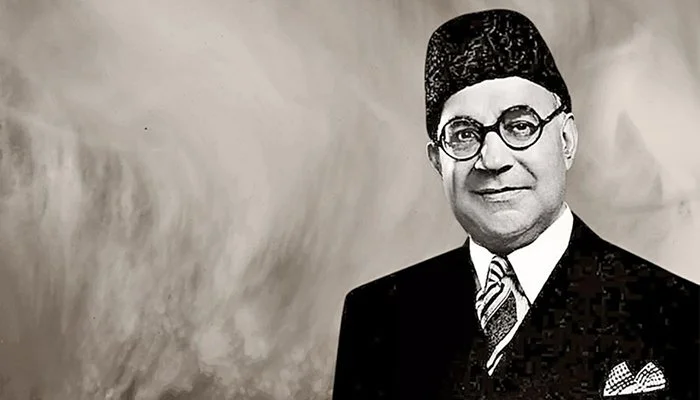
Liaquat Ali Khan was a prominent leader in the struggle for Pakistan’s independence and became the first Prime Minister of the newly established country. He played a crucial role in shaping Pakistan’s early political, economic, and social structures, laying the foundation for its future.
Early Life and Education
Born on October 1, 1895, in Karnal, India, Liaquat Ali Khan hailed from a well-educated and affluent family. He pursued higher education at Aligarh Muslim University and later at Oxford University, where he studied law and political science. His academic background equipped him with the intellectual prowess needed for leadership in the fight for independence.
Political Career and Role in the Pakistan Movement
Liaquat Ali Khan joined the All India Muslim League in 1923 and quickly rose through its ranks. As a close associate of Muhammad Ali Jinnah, he played a pivotal role in the demand for a separate Muslim state. He was instrumental in the passage of the Lahore Resolution in 1940, which laid the foundation for Pakistan’s creation.
As the Finance Minister of British India in 1946, Liaquat Ali Khan introduced the famous ‘Poor Man’s Budget,’ which aimed at taxing the rich and providing relief to the lower-income population. This move gained him immense popularity and demonstrated his commitment to economic justice.
Prime Minister of Pakistan
After the independence of Pakistan on August 14, 1947, Liaquat Ali Khan was appointed as the first Prime Minister. During his tenure, he worked tirelessly to stabilize the newly formed country. Some of his key contributions include:
- The Objectives Resolution (1949): He laid the foundation for Pakistan’s constitution by presenting the Objectives Resolution, which defined the ideological basis of the country and its commitment to Islamic principles.
- Foreign Policy: Liaquat Ali Khan maintained friendly relations with both the Western and Eastern blocs during the early Cold War period. His visit to the United States in 1950 strengthened diplomatic and economic ties.
- Economic and Social Reforms: He focused on economic development, land reforms, and education policies to uplift Pakistan’s population.
Assassination and Legacy
On October 16, 1951, Liaquat Ali Khan was assassinated while addressing a gathering in Rawalpindi. His sudden death left a significant void in Pakistan’s leadership, leading to political instability in the following years.
Liaquat Ali Khan’s contributions to Pakistan’s foundation and governance remain invaluable. He is remembered as a leader of integrity, vision, and dedication. His efforts in shaping Pakistan’s early years continue to inspire future generations of politicians and citizens alike.
♟ Conclusion
Liaquat Ali Khan’s leadership was instrumental in transforming the dream of Pakistan into a reality. His commitment to democracy, economic justice, and international diplomacy established the direction for the country’s early growth. Despite his tragic assassination, his legacy remains strong, and he is honored as one of Pakistan’s greatest leaders.
“The journey is not just about reaching the destination, but about becoming the best version of yourself along the way.” — Liaquat Ali Khan: The First Prime Minister of Pakistan
✉ Leave a Comment